


Dress elegantly, a notch more formally than you think you need to, and choose light natural fabrics because Sicily is hot and many ceremonies take place in a church. That is the short answer. The longer one depends on the invitation, the time of day, the venue (a baroque palazzo is not a clifftop terrace) and the season. In this guide we walk you through all of it, for women and men, so you arrive at the ceremony comfortable, photographed beautifully and respectful of the couple’s families.
We plan weddings in Sicily, so we see what guests actually wear, what they regret and what the couple quietly hopes for. Here is what we would tell a friend before the flight.
TL;DR
- Sicilian weddings lean formal, and when in doubt, dress up: being overdressed is never a problem, being underdressed is.
- Skip white, ivory and anything close to bridal. Cover shoulders and knees for the church ceremony (a shawl or wrap does the job).
- Choose linen, silk, light cotton or tropical wool, and shoes that can handle cobblestones, gravel and grass.
- Men: a tailored suit, usually with a tie. Tuxedos only if the invitation says black-tie.
- Read the invitation, the venue and the time of day together, and ask the couple or their planner if anything is unclear.
Table of Contents
- Start with the invitation
- The general rule: more formal than you expect
- What women can wear
- What men can wear
- Colors: what works, and what to avoid
- Fabrics and the Sicilian heat
- Let the venue and the hour guide you
- A quick packing list
- Perspective: what we see from the planner’s side
- Planning a wedding in Sicily yourself?
- Common mistakes to avoid
- What to wear month by month
- FAQ
- Sources
Start with the invitation
The invitation is your first and best clue. Couples marrying in Sicily with international guests often write the dress code on the invitation or on the wedding website, precisely because expectations differ between Rome, New York and Sydney. If there is a line such as “cocktail attire” or “black-tie”, follow it. If there is nothing, assume a polished, semi-formal look.
Here is how we would read the most common codes in a Sicilian setting.
| Dress code | Women | Men | Typical Sicilian setting |
|---|---|---|---|
| Formal / elegant (no further detail) | Midi or long dress, elegant jumpsuit, refined separates | Tailored suit, dress shirt, tie | Church ceremony, then a villa or estate reception |
| Cocktail attire | Knee-length or midi dress, dressy jumpsuit | Suit in a lighter shade by day, navy or charcoal in the evening | Garden, seaside terrace, historic masseria |
| Black-tie optional | Floor-length or very elegant midi dress | Dark suit or tuxedo | Palazzo, grand hotel, evening reception |
| Black-tie | Floor-length gown | Tuxedo with bow tie | Evening celebrations in historic venues |
| Mediterranean chic / beach formal | Flowing long dress in light fabrics, block heels or elegant flats | Linen or cotton suit, tie optional if the couple says so | Coastal terraces and beach clubs |
Tuxedos are generally not standard at Italian weddings unless the invitation explicitly asks for black-tie, as Il Fatto Quotidiano’s summer wedding guide for men points out. So if you see no mention of black-tie, leave the tux at home and wear a good suit.
And if the invitation says nothing at all? Look at three things: the time of the ceremony, the name of the venue and the couple’s own style on their website or social pages. A 4:30 pm church wedding followed by dinner in a historic estate calls for something more formal than a noon ceremony on a beach.
The general rule: more formal than you expect
Italian weddings tend to be more formal than many international guests are used to. One Italian wedding guide puts it plainly: even outdoor garden ceremonies carry an expectation of elegance, and when in doubt you should dress up. We agree completely.
Why does this matter so much in Sicily? Because a wedding here is rarely just a ceremony. It is a family event that can bring together grandmothers, cousins, neighbors and friends of three generations. People dress for the occasion, and for each other. Showing up in a sundress and flip-flops because “it’s a beach wedding” reads as casual to the groom’s relatives, even when nobody says a word.
That said, formal does not mean stiff. Sicilian style is polished but sensual and sun-aware: beautiful fabrics, good tailoring, color, jewelry. You are allowed to have fun with it.
What women can wear
Dresses and jumpsuits
The safest choice is a midi or long dress in a light, breathable fabric. Silk, chiffon, crepe, fine cotton and linen blends all work. A tailored jumpsuit is also perfectly acceptable for cocktail attire, provided the cut is elegant rather than beachy.
For the evening, especially at a palazzo or a black-tie reception, go longer and richer: satin, embroidered tulle, a statement neckline at the back rather than the front if the church comes first.
Italian fashion editors have long reminded guests that the dress should respect both the moment and the setting. If you want more inspiration from Italian style press, Vogue Italia’s guide to dressing for a wedding is a good place to browse looks (it is in Italian, but the images speak for themselves).
Church-ready: shoulders and knees
Many Sicilian couples marry in church, and even civil and symbolic ceremonies often take place in historic buildings. Travel guidance for Sicily is consistent here: dress modestly in churches and cathedrals, with shoulders and knees covered, and carry a scarf or sarong as a cover-up.
In practice that means:
- A strapless or spaghetti-strap dress is fine for the reception, as long as you bring a wrap, pashmina or light jacket for the ceremony.
- Choose a hem that covers the knee when seated, or plan to wear a long dress.
- Keep the neckline and back refined. A very low neckline in a church tends to draw looks, and not the ones you want.
- Put the shawl in your bag before you leave the hotel. Once the doors open, it is too late to go back for it.
Shoes that survive Sicily
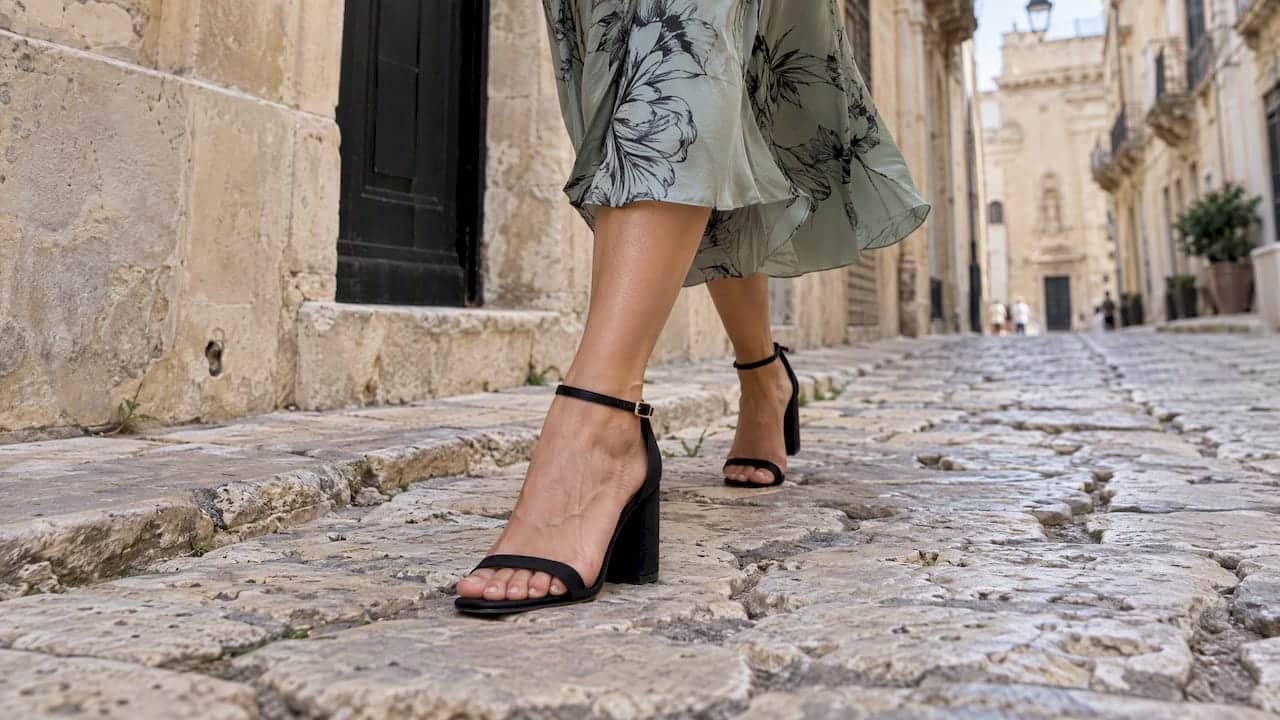
Sicilian venues are beautiful and unforgiving. Stone courtyards, uneven cobbles in the old towns, gravel paths in the gardens, lawns on a terraced estate, steps everywhere. Stilettos will sink, slip or snap.
Our advice: block heels, wedges or elegant flat sandals for the ceremony and cocktail hour. If you want to dance in heels, pack a second pair. And a pair of thin foldable flats in your bag will be the most useful item you carry all evening, because Sicilian receptions often go late and tend to end on the dance floor.
Accessories
A small clutch, sunglasses, a hat or fascinator if the invitation is very formal (leave the large hat at home if you will sit in a pew), and jewelry that makes sense for the hour: more discreet by day, more glamorous at night. A light fan is, honestly, both practical and charming.
What men can wear
For men, a tailored suit is the standard. According to the Il Fatto Quotidiano guide mentioned above, lightweight linen or cotton suits in lighter tones such as beige, light blue or pearl gray suit daytime events, while navy or darker suits are preferred for evening receptions. Ties are expected for formal ceremonies, though they may be omitted at casual daytime outdoor events if the couple permits it.
Practical translation:
- Daytime, summer, outdoors: a light-colored suit in linen, cotton or a wool-linen blend, a crisp shirt, loafers or leather lace-ups. Bring the tie anyway, and take it off only when others do.
- Church ceremony: jacket on, tie on, long trousers. No shorts, no open-collar polo.
- Evening reception: navy, charcoal or dark gray, with a tie or, if the couple has said “relaxed elegance”, an open collar under a well-cut jacket.
- Black-tie: tuxedo and bow tie, only when the invitation says so.
Socks should always be worn with dress shoes, a point the same Italian guide stresses. The no-show-sock trend does not travel well to a Sicilian church.
One more thing for men: avoid wearing a white or ivory suit unless the couple has specifically asked for it. We come back to this in the color section.
Colors: what works, and what to avoid
White, ivory and cream
This is the one near-universal rule. In Italy, wearing white as a guest is considered a firm no, because the color is reserved for the bride, as one Italian silk label’s guide to wedding colors explains. That includes ivory, champagne that reads as white in photographs, and any lace dress that could be mistaken for a bridal gown.
Black
Black is the question we hear most often, so let us be careful about it. Traditions are changing and a chic black dress or dark suit is common at evening events, particularly at black-tie receptions. At a daytime or summer wedding, though, an all-black outfit can look somber. If the groom’s family is traditional, or the ceremony is religious, lean toward color or soften black with jewel tones, metallics or a bright accessory. When in doubt, a quick message to the couple settles it.
Colors that feel Sicilian
The island’s palette gives you plenty to work with: lemon yellow, citrus orange, sea blue, terracotta, olive and sage green, dusty pink, the deep red of blood oranges, ceramic-tile blue and white (careful, white only as a pattern on a colored ground). Soft pastels look lovely in daylight; deeper jewel colors shine in the evening. If you like the idea of echoing the island’s traditions, our guide to a Sicilian themed wedding, with its colors and traditions, shows the palette we often draw on.
A small warning on loud patterns: a bold floral print can be wonderful, but make sure it reads as elegant. If it would work at the beach club, it may not work at the ceremony.
Fabrics and the Sicilian heat
Sicily rewards those who plan for the weather. The best-known wedding months run from late spring to early autumn, and one Sicily wedding guide notes that June brings warm seas and that September is particularly beautiful as the light turns golden. Warm does not mean casual, though, and a sweaty guest in a heavy dress is no one’s idea of elegance.
What to choose:
- Natural, breathable fabrics: linen, silk, cotton, lightweight wool. Avoid heavy synthetics that trap heat.
- Linen with a plan: linen wrinkles, which is part of its charm, but sitting for three hours in a car and a pew will leave its mark. Choose a linen blend or a dress with some structure, and steam it when you arrive.
- Layers: a wrap or light jacket helps in the church, in the air-conditioned restaurant and in the evening breeze off the sea.
- Prints and dark colors: they hide the inevitable creases and perspiration better than pale solid shades.
- Sun protection: sunglasses, a hat for the pre-ceremony wait, sunscreen applied before you dress.
If you are coming in the shoulder seasons (spring, October), pack a shawl or light coat. Evenings on the coast can feel cooler than you expect, particularly on a clifftop terrace.
Let the venue and the hour guide you
The venue tells you almost as much as the invitation. A useful way to think about it comes from the restaurant world: a fine-dining restaurant’s explanation of smart casual shows how the setting, the style of service and the occasion shape what people wear. A wedding works the same way. The more historic, formal and candlelit the place, the more your clothing should rise to meet it.
Baroque palazzos and historic estates
Think Noto, Ragusa Ibla, Modica or the old palaces of Palermo. These call for your most elegant outfit: long or midi dresses, tailored dark suits in the evening, polished shoes you can actually walk in on stone floors. If you want to understand what these venues are like, we describe them in our guide to luxury wedding venues in Sicily, with features, costs and insider insights.
Clifftop terraces and seaside venues
Taormina, Cefalù, the coast near Trapani. Expect wind, sun and sometimes uneven paths. Choose flowing dresses that will not become a sail (heavier chiffon or a dress with weight at the hem), wedges instead of stilettos, and a wrap for the golden hour. Men can go lighter, in linen or cotton, if the code is Mediterranean chic.
Countryside masserie and vineyards
Flat or block shoes are your friends. A midi dress and a good pair of sandals are perfect. Bring insect repellent and a light layer for the evening. Our article on outdoor weddings in Sicily, and where and how to organize them gives more detail about what these settings involve.
Beach weddings
Beach formal is still formal. A long, flowing dress, elegant flat sandals or wedges, and for men a light suit and loafers (leave the shirt-and-shorts look to the day after). If the sand is part of the ceremony, take your shoes in a bag and wear them for the reception.
Day versus night
Sicilian weddings often start in the afternoon and run long into the night. That means a daytime ceremony in a light color can be followed by a dinner where everyone looks a notch more glamorous. If you can, bring a small change: a jacket, a stole, a bolder piece of jewelry, a bow tie or a darker jacket.
A quick packing list
- Outfit for the ceremony, with shoulders and knees covered or a wrap.
- Shoes that suit stone and grass, plus foldable flats.
- A light layer for evening and for air conditioning.
- Sun protection: sunglasses, hat, sunscreen.
- A portable steamer or a plan with your hotel for pressing clothes.
- Small bag for essentials: tissues, a fan, blister plasters, a phone charger.
- For men: tie, pocket square, belt, dress socks, a spare shirt.
If you are traveling from far away, wear or carry the outfit on board. Luggage delays happen, and a missing dress is difficult to replace in a small Sicilian town on a Saturday.
Perspective: what we see from the planner’s side
We have stood at the church doors, at the cocktail hour and at the last dance, and here is the honest view from the other side of the guest list.
Guests rarely get it wrong because they lack taste. They get it wrong because nobody told them what the day would involve: a church before the party, cobblestones on the way, a terrace in the wind, a dinner that starts at nine. This is why we encourage couples to give guests clear information well in advance: the dress code, the schedule, the terrain, the weather to expect. A short, warm line on the wedding website (“elegant cocktail attire, flat or block heels recommended for the cobblestones, bring a shawl for the church”) spares everyone stress and keeps the photographs beautiful.
For couples, we also say this: your dress code is part of your design. The colors you suggest, the formality you choose and the way you describe it set the tone of the celebration long before anyone arrives. We work on this together with the venue, the lighting, the flowers and the stationery. Our piece on how event design shapes luxury weddings in Sicily goes deeper into that idea.
For guests, our simplest advice is the one at the top of this page: dress with care, respect the church and the families, choose comfort in the heat, and enjoy yourself. Sicilians love to see guests who have made an effort. It is taken as a compliment to the couple.
Planning a wedding in Sicily yourself?
If you are the one getting married, you do not have to write the dress code, the guest information and the logistics on your own. We offer full-service planning and design, vendor curation and event coordination for couples marrying in Sicily, and a concierge service dedicated to your guests that helps them with transfers, accommodation and practical questions, including what to wear. Tell us about your date and your venue, and we will take it from there.
Common mistakes to avoid
- Wearing white, ivory or anything bridal. Even a cream lace dress can be a problem in photographs.
- Ignoring the church. Bare shoulders and short hems may prevent you from entering some churches, or at least invite disapproving glances.
- Choosing shoes for the hotel lobby, not the venue. Cobblestones and gravel are unforgiving.
- Dressing for a tourist day. Shorts, flip-flops, beach cover-ups and sports sandals do not belong at the ceremony.
- Forgetting the evening. Temperatures drop near the sea, and air-conditioned dining rooms can feel cold.
- Wearing a heavy suit in July. Choose tropical wool or linen blends and a lighter lining.
- Showing up with no tie. Pack one, then follow the room.
- Not asking. If the code is unclear, a short message to the couple or planner is always welcome.
What to wear month by month
Spring (April to May): light dresses, linen blends, a shawl or jacket for the evening. Church interiors can be cool.
Early summer (June): the classic wedding season. Think breathable fabrics, bright but refined colors and a hat for the outdoor wait.
High summer (July and August): go for the lightest fabrics you own, keep layers minimal and choose shoes with a cushioned sole, because you will be on your feet for hours. Plan to freshen up between ceremony and dinner.
September: still warm, with golden light that flatters rich colors such as terracotta, olive, deep rose and sapphire.
October: pack a wrap, a lined jacket or a stole for the evening, and keep a fabric with a little weight.
FAQ
What do guests wear to weddings in Italy?
Guests usually dress elegantly: midi or long dresses and dressy jumpsuits for women, tailored suits for men, often with a tie. Italian weddings are generally more formal than many international guests expect, so dressing up is the safer choice. Follow any dress code written on the invitation.
Is it okay to wear black to a wedding in Sicily?
It can be, particularly for an evening or black-tie event, but an all-black look may feel somber at a daytime or religious celebration. If you love black, add color, texture or a bright accessory, or choose a jewel tone instead. When the families are traditional, a quick question to the couple removes any doubt.
What is the dress code in Sicily?
There is no single official dress code: the invitation sets it. As a baseline, expect semi-formal to formal clothing, covered shoulders and knees for the church, light natural fabrics for the heat and comfortable shoes for stone, gravel and grass. Men should plan on a suit, and a tuxedo only for black-tie.
What is not appropriate to wear as a wedding guest?
White, ivory and bridal-looking dresses, jeans, shorts, flip-flops, beachwear and revealing outfits in church. Tuxedos are also out of place unless the invitation specifically asks for black-tie. If you are unsure, choose the more elegant option.
Can I wear a short dress to a Sicilian wedding?
You can at a cocktail-style reception, but we suggest a hem at or below the knee for the church ceremony, or a wrap that covers your shoulders. A midi length gives you the best of both worlds and works in almost every setting.
Sources
- Il Fatto Quotidiano: summer weddings, how men should dress
- Italian Venues: Attending an Italian Wedding, the complete guest guide
- Open Travel Guide: Sicily culture, customs and etiquette
- Serà Fine Silk: the 5 colors to avoid in your Italian wedding look
- Italian Venues: Sicily wedding guide
- Vogue Italia: come vestirsi a un matrimonio