


May, June, September, and early October are the strongest months for a Sicily wedding, offering warm days, softer evening light, and manageable logistics without the punishing midday heat of high summer. July and August work beautifully too, but only if you build the day around the sun rather than against it, with evening ceremonies and real heat mitigation. Winter, from November through March, is the quiet alternative for couples who want an intimate, indoor celebration at a lower cost.
TL;DR:
- The best months for outdoor weddings in Sicily are May, June, September, and October, due to favorable weather, sea temperatures, and lower crowds.
- July and August are possible but require evening ceremonies, cooling measures, and contingency plans because of high daytime temperatures exceeding 35°C and the risk of the hot scirocco wind.
- Booking venues and vendors for peak months should begin 12 to 18 months in advance, especially in popular locations like Taormina and Noto.
- Couples should plan for weather contingencies, indoor alternatives, and season-specific logistics such as timing and vendor experience to ensure a smooth celebration.
Table of Contents
- What Is the Best Time to Get Married in Sicily?
- How Does the Right Season Change by Region in Sicily?
- What Should Couples Plan Differently by Season?
- When Should You Book Venues and Vendors in Sicily?
- What Should You Do Right After Choosing a Date?
- What Sicilian Planners Actually Tell Couples About Timing
- Why “Best Time” Should Be a Strategy, Not a Guess
- Ready to Plan Your Sicily Wedding in the Right Season?
- Sources
- FAQ
What Is the Best Time to Get Married in Sicily?
If you ask a local planner the miglior periodo matrimonio sicilia, most will point to the same window: late spring through early autumn, with a strong preference for the shoulder months. That is not aesthetic bias. It comes down to what actually happens on the ground when 80 to 150 guests, a photographer, a catering team, and a wedding party all need to function outdoors for six or seven hours.
Sicily’s usable outdoor wedding season runs roughly from April through October, and within that window, May, June, September, and October are consistently the months experts single out as the most dependable. The reasoning holds up month by month.
Spring (April to May) brings mild temperatures, wildflowers still blooming across the countryside, and outdoor ceremonies that don’t require a contingency plan for heat. April is the cooler edge of that range and can still surprise you with a rain shower, so a backup indoor space is worth having, especially for anyone marrying near the coast where weather shifts faster than inland.
Early summer (June) is arguably the sweet spot for coastal and countryside venues. Days stretch long, the sea has warmed enough for guests who want to swim, and the heat hasn’t yet turned punishing. Ragusa-area climate data shows June averaging in the low-to-mid 20s°C, comfortable enough for a full afternoon outdoors without wilting your florals or your guests.
High summer (July and August) is where things get complicated. Daytime highs regularly climb past 35°C in parts of the island, and the scirocco, a hot wind blowing up from North Africa, can push temperatures and humidity even higher for a day or two at a stretch. This doesn’t rule out a summer wedding. It just means the entire schedule needs to shift: ceremonies after 6 or 7 PM, air-conditioned reception spaces or heavily shaded terraces, and a hydration plan that goes beyond a water station by the door.
Autumn (September to early October) is where many planners, ourselves included, think the real magic happens. The sea is still warm from summer, Siracusa’s water temperature averages around 26.7°C in late summer and holds warm well into September, tourist crowds have thinned, and the light takes on a softer, golden quality that photographers chase all year. It’s the season local experts describe as the most balanced, because it reduces the contingency work couples otherwise carry into July and August.
Winter (November to March) rewards couples chasing something different entirely: exclusivity. Venues that are booked solid every June suddenly have open weekends, prices soften, and a candlelit indoor ceremony inside a baroque palazzo has its own kind of drama that summer weddings simply can’t replicate. The trade-off is obvious. Winter weddings mean fewer outdoor options and shorter daylight, so your venue needs a genuinely beautiful indoor space, not a converted afterthought.
Here’s how the four seasons stack up at a glance:
- Spring (April to May): Mild, blooming, ideal for outdoor ceremonies; April needs a rain contingency.
- Early summer (June): Long days, warm sea, comfortable heat, strong choice for coastal venues.
- High summer (July to August): Intense heat and scirocco risk; requires evening timing and cooling measures.
- Autumn (September to early October): Warm sea, gentler light, fewer crowds; often the most balanced choice.
- Winter (November to March): Indoor, exclusive, budget-friendly; limited outdoor flexibility.
How Does the Right Season Change by Region in Sicily?
Sicily isn’t one climate. A wedding in Taormina behaves differently from one in Favignana, and treating the island as a single weather zone is where a lot of planning goes wrong.
Taormina and the Noto/Ragusa baroque zone sit slightly inland or on elevated coastline, which tempers the worst of the midsummer heat compared to lower beach towns. Both April and October work well here, when the golden stone of Noto’s baroque churches catches the light without the crowds that pack Taormina’s Corso Umberto in July. If you’re drawn to baroque architecture and dramatic sea-view terraces, these shoulder months let you actually enjoy the setting instead of rushing guests indoors by 2 PM.
Favignana and the Aeolian Islands answer to the sea more than the calendar. June and September keep sea-accessibility intact while avoiding the peak boat traffic and packed ferries of late July and August, when day-trippers flood these islands. A summer island wedding is possible, but you’re competing with tourism infrastructure at its most stretched, from ferry schedules to restaurant reservations.
Inland hill towns, places like Enna, Caltagirone, or the countryside around Ragusa, run a few degrees cooler than the coast in summer, thanks to elevation. October in particular can be an excellent choice here: harvest season, cooler evenings, and a rural backdrop that photographs beautifully without the coastal humidity.
Coastal terraces offer a different advantage entirely: longer evening usability. Sea breezes keep nights milder even in August, which is exactly why so many coastal venues push their ceremony start times later rather than earlier.
A quick way to think about it:
- Taormina, Noto, Ragusa: April and October for light and lower crowds.
- Favignana, Aeolian Islands: June and September for calm seas and lighter ferry traffic.
- Inland hill towns: October for cooler evenings and harvest-season scenery.
- Coastal terraces: Any warm month, with later start times extending usability into August.
What Should Couples Plan Differently by Season?
Choosing a month is only the first decision. What you do with that choice, operationally, is what actually determines whether the day feels effortless or exhausting.
- Adjust ceremony timing to the season. For July and August weddings, start the ceremony no earlier than 6 or 7 PM, which also happens to align with the golden hour photographers want anyway. For spring and autumn, you have far more flexibility, since a 4 PM ceremony won’t leave anyone squinting or sweating.
- Build in guest comfort measures. Shaded seating, a cooling station with iced towels or fans, and clear guidance on lightweight dress codes matter more than most couples expect until their guests are visibly uncomfortable an hour into cocktail hour.
- Choose vendors who’ve handled Sicilian heat before. A photographer who’s shot a dozen August weddings in Sicily knows how to work around harsh midday light; a caterer who’s done it knows which dishes hold up outdoors at 30°C. Ask directly about their experience with tenting, backup power for lighting, and heating options for shoulder-season evenings that turn cooler than expected.
- Let the season shape your menu and flowers. Sicilian produce peaks locally by month, tomatoes and stone fruit in summer, mushrooms and squash by October, and building your menu around what’s actually in season keeps both freshness and cost in check.
- Have an indoor contingency even for “safe” months. Spring rain and early-autumn thunderstorms happen. A venue with a genuine indoor alternative, not a tent thrown up as a last resort, removes the single biggest source of day-of stress.
Pro Tip: Ask your venue coordinator specifically how they’ve handled a sudden weather shift in the past, a real example, not a hypothetical plan. Their answer tells you more about readiness than any brochure will.
For outdoor ceremonies specifically, it helps to see how other couples have structured their setups around exactly these seasonal pressures, from tenting choices to lighting rigs that hold up against coastal wind.
When Should You Book Venues and Vendors in Sicily?
Book earlier than you think, especially if June or September is your target. Premium venues around Noto and Taormina commonly require 12 to 18 months of lead time for weekend dates in those months, and the best photographers and caterers get locked in even further ahead by couples who know exactly what they want.
Price follows demand in a fairly predictable pattern:
- Peak season (June, September weekends): Highest venue rates, least room to negotiate, earliest booking deadlines.
- Shoulder weekdays (May, October): Meaningful savings with only a modest trade-off in weather certainty.
- Off-season (November to March): Lower costs and high availability, but limited to indoor formats.
- Off-peak weekdays anywhere: Often the single best lever for accessing a premium venue without the peak-weekend premium.
Logistics compound the booking question. Sicily’s geography spreads venues across long drives, Palermo to Taormina alone takes roughly three hours on secondary roads, and multi-day celebrations spanning a welcome dinner, ceremony, and farewell brunch need those travel windows built into the schedule from the start. Planners generally recommend a 30 to 60 minute buffer for every inter-venue transfer, since Sicilian roads and island ferry timetables rarely run exactly on time.
If your heart is set on a specific venue for June or September, the honest advice is to start that conversation now, not next quarter.
What Should You Do Right After Choosing a Date?
Once you have a provisional month in mind, a handful of moves in the next few weeks will tell you whether that date actually works.
- Check the venue’s live calendar, not just general availability, since popular Saturdays in June and September often go first.
- Block accommodation for your guest count early, particularly in Taormina and Favignana, where hotel inventory tightens fast in shoulder and peak months.
- Confirm your core guests’ travel windows before you commit, especially for international arrivals who need flight and time-off planning.
- Ask every vendor directly about their season-specific experience: have they run late-evening setups, do they carry backup lighting, can they offer heating for a cooler October night?
- Verify local event conflicts for your target date, including religious festivals, national holidays, and, for island weddings, ferry schedules that can affect both guests and vendors moving equipment.
Running through this list before you sign a single contract catches most of the surprises that otherwise surface three months out, when fixing them costs far more time and money.
What Sicilian Planners Actually Tell Couples About Timing
We’ve watched couples fall in love with an August date because it matched their work calendar, only to spend the ceremony sweating through vows at 2 PM under a sun that left half the guests hiding in whatever shade they could find. We’ve also watched a relaxed May wedding unfold with almost no drama at all: mild afternoon, blooming courtyard, guests comfortable enough to actually enjoy cocktail hour instead of surviving it.
The best period isn’t the prettiest month on a brochure. It’s the month that matches the kind of day you actually want, festive summer energy with real heat management, or a calmer shoulder-season rhythm with fewer moving parts to manage.
Both can be beautiful. Only one requires you to plan around the sun instead of with it.
Why “Best Time” Should Be a Strategy, Not a Guess
Most wedding content treats “best month” as an aesthetic question, chasing the prettiest light or the most Instagrammed season. That framing undersells what actually determines whether a wedding day succeeds: guest comfort and logistical margin. A May afternoon and a September evening aren’t just prettier than an August noon ceremony, they carry far less operational risk.
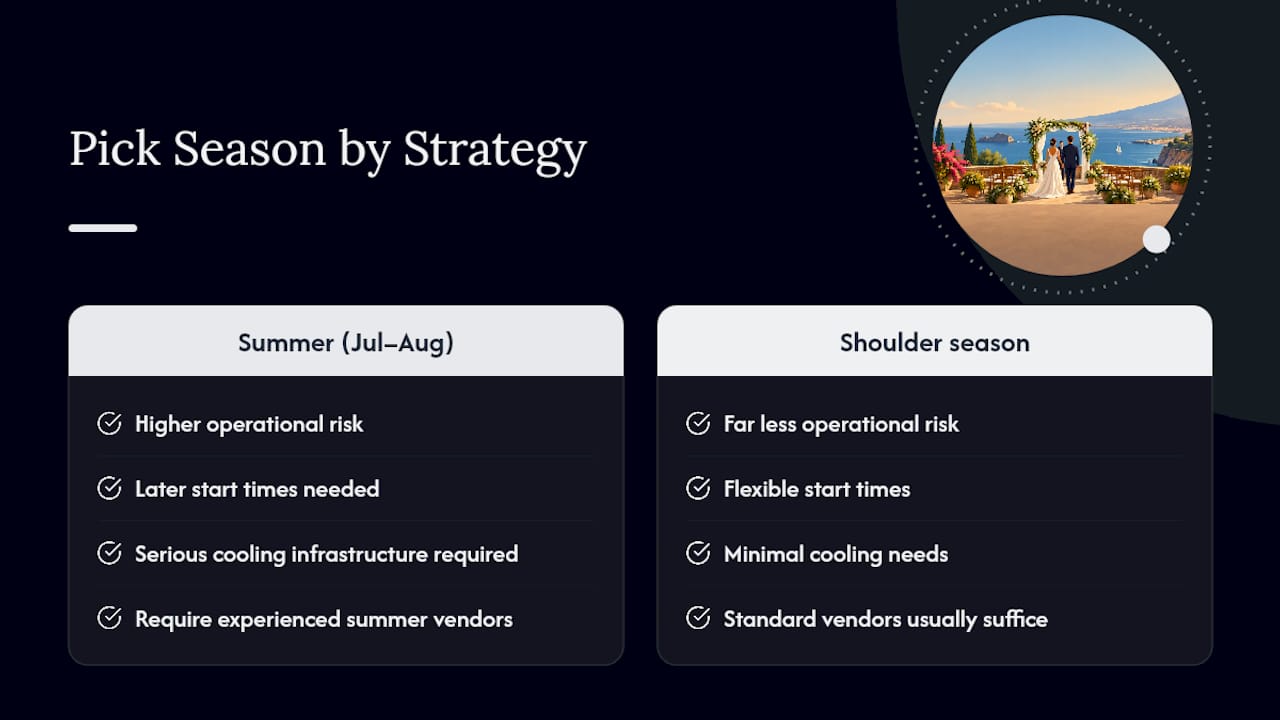
The conventional advice oversells summer and undersells the trade-offs baked into it. July and August aren’t wrong choices, but they demand a completely different playbook: later start times, serious cooling infrastructure, vendors who’ve done this before. Couples who treat summer like spring with better weather are the ones who end up with wilted florals and overheated guests.
What should you prioritize first? Not the color palette. Not even the venue. Decide what kind of day you want, high-energy summer celebration or unhurried shoulder-season elegance, and let that decision drive the month, the timeline, and the vendor conversations that follow. Everything else falls into place once that’s settled.
Ready to Plan Your Sicily Wedding in the Right Season?
Choosing the right month is only half the equation. Getting the venue, vendors, and timeline to actually work together within that window is where most couples planning long-distance run into trouble. A locally based, full-service planning team can handle that coordination, scouting venues, curating vendors experienced with Sicilian heat and shoulder-season shifts, and managing the logistics of multi-day celebrations across the island. Whether you’re drawn to a September terrace overlooking the Ionian Sea or a spring courtyard in the baroque south, our planning and design services are built around exactly the seasonal trade-offs covered here. If Taormina has caught your eye, our vendor curation for that region is a natural next stop, and couples considering an intimate ceremony can explore our elopement planning in Sicily to see what a smaller, season-flexible celebration looks like. Reach out to check availability for your target month before it’s gone.
FAQ
What Is the Best Time of Year to Get Married in Sicily?
May, June, September, and early October offer the strongest balance of warm weather, comfortable evenings, and manageable crowds. These shoulder months reduce the contingency planning that summer dates require, from cooling stations to strict evening scheduling.
What Is the Most Beautiful Month to Get Married in Sicily?
Many photographers and planners point to September and October for their softer, golden light and warm sea temperatures that linger from summer. Siracusa’s coastal waters stay warm well into early autumn, making these months a favorite for waterfront ceremonies without the harsh midday sun of July.
Is There a Luckiest Month to Get Married?
Sicilian tradition doesn’t single out one universally “lucky” month, though May is sometimes viewed with more caution in older Italian folklore tied to broader Italian superstition rather than anything specific to Sicily. Most couples today choose based on weather and guest comfort rather than superstition, and shoulder-season months remain the practical favorite regardless.
When Should You Avoid Getting Married in Sicily?
Late July through mid-August is the trickiest window, since daytime highs frequently exceed 35°C and the scirocco wind can add uncomfortable humidity. It’s not off-limits, but it demands evening ceremonies, shaded or air-conditioned venues, and a hydration plan built into the schedule.
How Far in Advance Should You Book a Sicilian Wedding Venue?
Premium venues in Noto and Taormina typically need 12 to 18 months of advance booking for June and September weekend dates. Off-season and weekday dates offer far more flexibility and shorter lead times if your calendar allows some movement.