


Yes, Sicily can absolutely host a full, traditional multi-day Indian wedding, and it does so beautifully. But matrimonio indiano sicilia celebrations succeed only when three things are locked early: a local full-service planner, catering that genuinely understands Indian dietary needs, and a qualified officiant or pandit. Portfolio proof and real in-market experience separate the planners who can deliver this from the ones who are guessing.
TL;DR:
- Securing a local full-service planner with experience in Indian weddings is essential to manage venue, vendor, and ritual logistics effectively.
- Venue selection prioritizes ritual needs such as open spaces for Sangeet and dramatic backdrops for the mandap, with options like Taormina, Cefalù, and rural estates.
- Planning requires booking vendors at least six to fourteen months in advance, especially for high season, with particular attention to catering, officiants, and AV needs.
- Blending Indian rituals with Sicilian style is best achieved through cultural integration like regional ingredients, local décor, and culinary fusion rather than recreating India entirely.
Table of Contents
- What Does a Traditional Indian Wedding in Sicily Look Like?
- Which Sicilian Venues Suit Indian Wedding Rituals?
- What Vendors and Logistics Does a Sicilian Indian Wedding Need?
- What Does a Sicilian Indian Wedding Cost?
- How Do You Blend Indian Ritual With Sicilian Style?
- What Do Sicilian Wedding Planners Actually Prioritize?
- How Sicilianweddingandevent Plans Your Indian Wedding
- Sources
What Does a Traditional Indian Wedding in Sicily Look Like?
A proper Indian wedding is never a single event; it is a sequence of rituals, each with its own mood, music, and dress code. Haldi brings turmeric paste and laughter in equal measure. Mehendi slows down for henna artistry and storytelling. Sangeet turns loud with choreography and dancing late into the evening. The mandap ceremony, built around the Saptapadi (seven sacred steps), anchors the whole celebration in quiet ritual meaning.
A recent Sicilian celebration stretched across three days and 250 international guests, with Haldi, Sangeet, Mehendi and the Hindu ceremony staged between a resort near Cefalù and a castle in Trabia, proof the island can absorb this scale without losing intimacy.
A workable three day arc looks like this:
- Day one: Haldi at midday in a shaded courtyard, followed by an informal welcome dinner.
- Day two: Mehendi in the afternoon, Sangeet after sunset with a stage and dance floor.
- Day three: Mandap ceremony at golden hour, reception dinner running late into the night.
Build in rest windows and late-night snack stations. Jet-lagged guests from India, the UK, or the US need food available past midnight, not just at scheduled meals.
Which Sicilian Venues Suit Indian Wedding Rituals?
Venue choice should follow ritual needs first, aesthetics second. A Sangeet needs open floor space and forgiving acoustics. A mandap ceremony wants a backdrop dramatic enough to hold its own against the ritual itself.
- Taormina: clifftop terraces with Ionian Sea views, ideal for the ceremony day, though parking and access roads are tight in peak season.
- Cefalù: coastal resorts and historic centers offering flexible outdoor space, used successfully for large Indian celebrations.
- Palermo: baroque palazzi and castles nearby, strong for indoor Sangeet staging when summer heat is a concern.
- Aeolian Islands: dramatic and exclusive, but ferry logistics limit guest counts and vendor access.
- Rural estates and baglios: stone courtyards and citrus groves that pair naturally with Indian color and ritual staging, with generous space for multi-day events.
Sicily’s broader mix of seaside terraces, baroque palaces, and island venues gives couples real choice, but sound restrictions and shoulder-season weather deserve early attention. Our guide to Sicily’s top wedding venues breaks these tradeoffs down by capacity and style.
What Vendors and Logistics Does a Sicilian Indian Wedding Need?
A multi-day Indian wedding in Sicily runs on the strength of its vendor network, not just its venues. Booking sequence matters as much as vendor quality.
- Pandit or officiant: source early, and confirm whether translation support is needed for local staff and vendors.
- Catering: request vegetarian-forward menus that respect spice handling, with at least two tastings before the event.
- Mehndi artist: schedule a half-day block, separate from hair and makeup, to avoid rushing.
- AV and music: confirm outdoor sound permissions ahead of the Sangeet, since rural venues often carry noise curfews.
- Transport and lodging: block rooms across two or three properties and arrange shuttle loops between venues and hotels.
Real Sicilian Indian weddings depend on careful vendor staging across florals, AV, and catering, especially when the guest list runs into the hundreds. During high season, from May through September, secure venues and key vendors 10 to 14 months out; off-season weddings can move faster but still need six to nine months of lead time.
Pro Tip: Run a mock late-night service during your rehearsal dinner. It exposes plating and timing issues before 250 hungry guests find them for you.
What Does a Sicilian Indian Wedding Cost?
Budget ranges in Sicily vary widely depending on scale and ambition, but the underlying math is consistent: guest count and venue exclusivity move the number more than any other factor.
Luxury destination weddings in Sicily typically start around €80,000–100,000 for an intimate celebration with a private venue buyout, while elaborate multi-day events full villa or castle exclusivity, bespoke design, and international guest logistics routinely climb past €250,000–300,000.
For Indian weddings specifically, three drivers push costs higher: exclusive-use venue rental across multiple days, catering that blends imported spices with local sourcing, and accommodation blocks for guests who often stay five to seven nights. Prioritize spend on ceremony fidelity and food quality first; decorative extras are where budgets can flex without compromising the experience. Our breakdown of luxury wedding cost factors walks through these tradeoffs in more detail.
How Do You Blend Indian Ritual With Sicilian Style?
The best Sicilian Indian weddings never try to recreate India. They let Sicily’s stone courtyards, citrus groves, and coastal light frame Indian color and ritual on their own terms.
- Use marigold and jasmine against limestone walls rather than importing full backdrop sets.
- Build vegetarian Indian mains around Sicilian vegetables and citrus, which lowers import costs and delights guests unfamiliar with the cuisine.
- Add a late-night spaghettata, the informal pasta service Sicilians serve after long parties, as a bridge between cultures.
Culinary fusion that uses Sicilian produce in vegetarian Indian dishes works because it respects dietary rules while cutting logistics. The goal is never theatrical staging of culture; it is a wedding that feels rooted in both traditions at once.
Pro Tip: Ask your caterer for one Sicilian-Indian fusion dish per event day. Small, deliberate touches read as thoughtful; too many feel like a gimmick.
What Do Sicilian Wedding Planners Actually Prioritize?
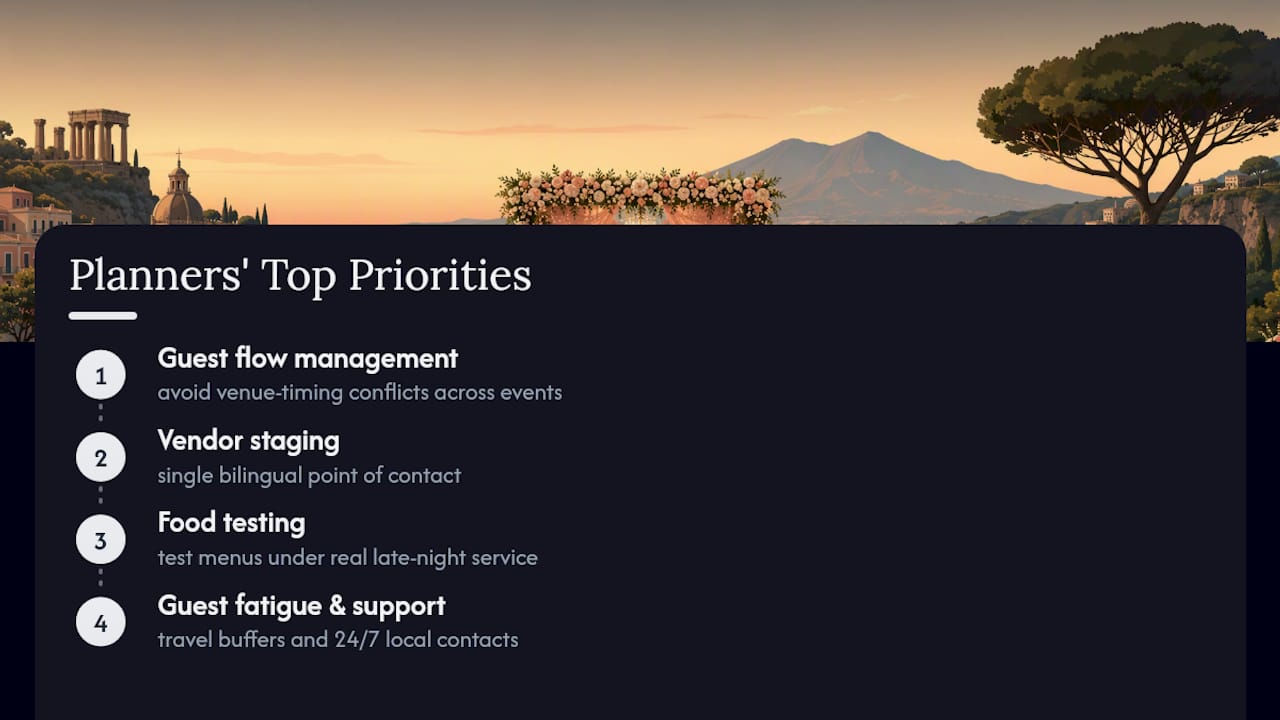
Every large-scale Indian wedding we have staged in Sicily comes down to the same handful of decisions made early and correctly. Guest flow across multiple venues is the first fight worth having, because a 250-person Sangeet that spills into a badly timed mandap ceremony the next morning exhausts everyone before the vows are even spoken.
Vendor staging comes second. Florals, AV, and catering need one point of contact who speaks both the couple’s language and the local vendor’s, not a chain of translated emails. Food testing is non-negotiable; a menu that reads well on paper can fail entirely under real late-night service pressure. Multi-day events succeed when planners build in travel-fatigue buffers and give guests more than one local-language contact to call when something goes wrong at 11 p.m. Our portfolio shows how these priorities play out across real venue pairings and guest counts.
How Sicilianweddingandevent Plans Your Indian Wedding
Sicilianweddingandevent is the direct alternative to piecing together venues, caterers, and a pandit yourself from another continent. Led by Tania Costantino, the full-service package covers venue scouting matched to ritual needs, vendor curation for catering and mehndi, multi-day event coordination, and cultural liaison work that includes sourcing a qualified officiant.
Imported requirements, from spice-safe kitchens to translation support, get handled before you land, and guest logistics across hotel blocks and transfers are managed as one coordinated plan rather than a dozen separate bookings. If you’re ready to start mapping out dates and venues, our wedding planning to-do checklist is the practical next step, and you can request a consultation to talk through your guest count, ritual priorities, and venue shortlist directly with the team.
Sources
- Le nozze indiane in Sicilia di Sanjana e Ansh in una cornice da sogno — ELLE
- Sunset Hues & Sacred Rituals: A Luxury Indian Wedding at Baglio Donna Franca, Sicily — WeddingSparrow
- Wedding in Sicily: where to get married and traditions to know — Domina
- Il Matrimonio Indiano di Kartik ed Erica — The Real Wedding