


The fastest, most reliable way to organize scenic photo sessions is to put one person in charge of the whole creative arc: your planner. A planner who scouts light and permits ahead of time, briefs your photographer and videographer as one team, and protects a dedicated golden-hour window will get you better portraits with far less stress than a couple juggling vendors solo.
Here’s the one-page plan worth asking for before you sign anything:
- Confirmed scouting visit (in person or virtual) with GPS coordinates for primary and backup spots
- Permit status for each scenic location, with lead times noted
- A protected golden-hour block, built into the day’s master timeline
- Transport plan with vehicle counts and arrival windows
- Shot list and a named family-formals coordinator
- Indoor backup locations in case weather turns
Pro Tip: Ask your planner for this checklist in writing during your first planning call, not the week of the wedding. If they can’t produce one on request, that’s a real gap in their process.
Your next move is simple: request a one-page scenic session plan and a scouting appointment from your planner before you finalize your ceremony timeline. Sicilian Wedding and Event builds exactly this kind of plan into every full-service booking, which is why it’s worth using as your benchmark when comparing planners.
Key Takeaways
Organizing scenic photo sessions works best when one planner owns logistics and permits while the photography team owns creative execution, all built around a protected golden-hour block.
| Point | Details |
|---|---|
| One planner, one plan | A single one-page document covering scouting, permits, transport, and shot lists prevents vendor gaps. |
| Protect golden hour | Build a fixed 30 to 60 minute portrait block into the timeline and schedule around it, not the other way around. |
| Build real buffers | Add 10 to 20 minute buffers between transitions and 1.5 to 2.0x multipliers for multi-venue transfers. |
| Confirm permits early | File permit applications 60 to 90 days ahead and confirm restrictions on drones, tripods, and time-of-day access. |
| Work with an integrated planner | Sicilian Wedding and Event coordinates scouting, permits, and vendor curation as one plan for luxury Sicily weddings. |
Tools and resources worth checking before you plan
- PhotoPills or World Time Buddy to confirm exact golden-hour and sunset timing for your venue’s coordinates
- Destination wedding timeline guides to share directly with your photographer and videographer
- Your venue’s local permit office, contacted well ahead of the 60 to 90 day filing window
Table of Contents
- What belongs on your scenic photo session plan?
- How should your planner and photographer split responsibilities?
- What does a realistic scenic session timeline look like?
- What should you check when scouting a location?
- How do you move people between locations without disrupting the day?
- Should you do an engagement shoot, a day-after session, or both?
- How do you brief your planner and photographer properly?
- Who does what: photographer, videographer, assistant, and coordinator?
- What does a full wedding day scenic session timeline actually look like?
- How do permits work for popular scenic locations?
- What does a scenic photo session actually cost?
- What happens when something goes wrong on the day?
- Why integrated planning protects both your photos and your guests
- How Sicilian Wedding and Event turns this plan into your wedding day
- Frequently Asked Questions
- Sources
What belongs on your scenic photo session plan?
A proper one-page plan reads like a pilot’s checklist, not a mood board. It should list the confirmed golden-hour time for your actual wedding date, exact GPS coordinates for your primary and backup locations, current permit status, and a transport plan naming vehicles and estimated arrival times.
It also needs on-site vendor arrival windows, a battery and gear logistics line (so nobody’s second shooter shows up with a dead flash), a guest impact plan, and itemized costs: permits, parking, any extra shooter hours, and transfer fees. The cost drivers behind a luxury wedding rarely show up in a venue quote, so this line item matters more than couples expect.
The plan should also carry your shot list highlights and name a specific family-formals coordinator, since group photos are the most common place a timeline unravels. Finalizing this list before the day and assigning a coordinator to herd relatives keeps golden hour from getting eaten by “just one more cousin” photo, since each family combination reliably takes a sufficient amount of time to find and arrange individuals once you account for finding people and arranging them.
Finally, build a visible contingency row: what happens with rain, a power outage at the venue, or a 30-minute delay, and who makes that call.
- Golden hour time and GPS coordinates for every location
- Permit status and transport plan with named vehicles
- Shot list, family-formals coordinator, and gear checklist
- Cost line items and a contingency go/no-go owner
Pro Tip: Have your planner distribute this as both a printed handout for vendors and a shared, itemized timeline in the day-of group chat. Paper gets left in a car; a phone doesn’t.
How should your planner and photographer split responsibilities?
Confusion between planner and photographer is where scenic sessions go wrong, so the division of labor needs to be explicit and contractual, not assumed.
Your planner owns permits, transport, guest experience, access windows, vendor permissions, timeline authority, and the backup-location scouting. Your photographer and videographer own the location lighting plan, shot-list leadership, pacing during the actual portrait session, their own equipment checklist, and creative decisions once the camera is up. This division matters because planning stills and film together as one creative vision produces a cohesive final story, but that only works if logistics stop being the photographer’s problem.
| Milestone | Owner | Timing |
|---|---|---|
| Location scouting complete | Planner | 3+ months before |
| Shot list approved | Photographer + couple | 6 to 8 weeks before |
| Transport and permits confirmed | Planner | 4 weeks before |
| Final timeline signed | Planner + photographer | 48 to 72 hours before |
On the day itself, one person updates the live timeline and makes go/no-go calls, typically the planner or day-of coordinator, communicated through a shared group chat everyone can see.
- Lock scouting and permits early so nothing depends on last-minute approvals.
- Approve the shot list weeks out, not the morning of.
- Sign a final timeline 48 to 72 hours before the wedding, with no open questions left.
Pro Tip: Ask your photographer for a one-page lighting plan and two reference images of the intended golden-hour look before the wedding. If they can’t produce this, they haven’t scouted your venue yet.
What does a realistic scenic session timeline look like?
Timelines fail for one reason more than any other: nobody built in buffer time, and the day runs long the moment the first vendor is five minutes late.
Template one: single-site day with golden hour. Getting ready runs 1.5 to 2 hours, first look and portraits take 30 to 60 minutes, and you protect a dedicated 30-minute golden-hour block for couple portraits, a duration range that holds up across most destination weddings.
Template two: multi-venue day with an off-site portrait stop. Add a transfer block calculated at 1.5 to 2.0 times your map’s driving estimate for Saturday traffic, since route optimization matters less than buffer time once you’re moving a wedding party between locations.
Template three: intimate micro-wedding with pre-ceremony portraits. A first look lets you shoot portraits in soft morning light and frees up golden hour for candid reception coverage instead.
- Decide first look vs. after-ceremony portraits based on which one protects golden hour on your specific date.
- Add a fixed 10 to 20 minute buffer between every transition, not just the big ones.
- Schedule photographer arrival 20 to 30 minutes ahead of the couple at each new location.
Real wedding days commonly run about 15% behind schedule across the whole timeline, which on a 10-hour day means absorbing roughly 90 minutes of drift. Timelines that don’t plan for this collapse exactly where golden hour lives.
What should you check when scouting a location?
Scouting is where good sessions get decided weeks before anyone shows up with a camera. Confirm exact GPS coordinates, the sun path for your actual wedding date (not a generic estimate), and any micro-locations worth knowing about, like a hidden courtyard or a wall that throws good reflected light.
- Pedestrian and vehicle access, plus safe footing for guests in heels and gear on uneven ground
- Power availability if your photographer needs it for lighting equipment
- Permit lead time and restrictions on drones, tripods, or commercial photography
- Indoor alternative locations, listed explicitly on your one-page plan, not left as an afterthought
Confirming light and indoor backups in advance is one of the clearest differences between a session that feels effortless and one that gets rushed. Sicilian Wedding and Event’s own location scouting process walks couples through exactly this before any date is locked.
Pro Tip: Use an app like PhotoPills to confirm the exact sunset minute for your venue’s coordinates. “Golden hour” shifts by weeks across a Sicilian summer, and guessing costs you the light.
How do you move people between locations without disrupting the day?
Vendor-only transfers are almost always the better choice for portrait sessions; guests should stay put unless the shoot genuinely calls for their presence. When guests do need to move, consolidate them into organized shuttles with clear pickup times rather than a scatter of taxis.
Protect guest comfort with shade and water if portraits run during the heat of the day, and make sure there’s a warm welcome back at the reception if you’re running behind. One logistics lead, whether that’s your planner or day-of coordinator, should hold authority to make timing calls on the spot. A printed timeline, a vendor parking plan, and a shared phone list distributed in advance keep everyone moving without confusion.
Should you do an engagement shoot, a day-after session, or both?
Pre-wedding and post-wedding sessions exist for one practical reason: they take the pressure off the wedding day itself. An engagement shoot, done months ahead in a favorite Sicilian setting, lets you both relax without a ceremony clock ticking, and it gives you a chance to test how you move and pose together before the real day arrives.
A day-after session works differently. You’re already dressed, already relaxed, and the wedding is behind you, which tends to produce looser, more genuine portraits than anything shot mid-timeline. Pre and post sessions reduce day-of pressure precisely because there’s no ceremony, no guests waiting, and no golden-hour countdown competing for your attention.
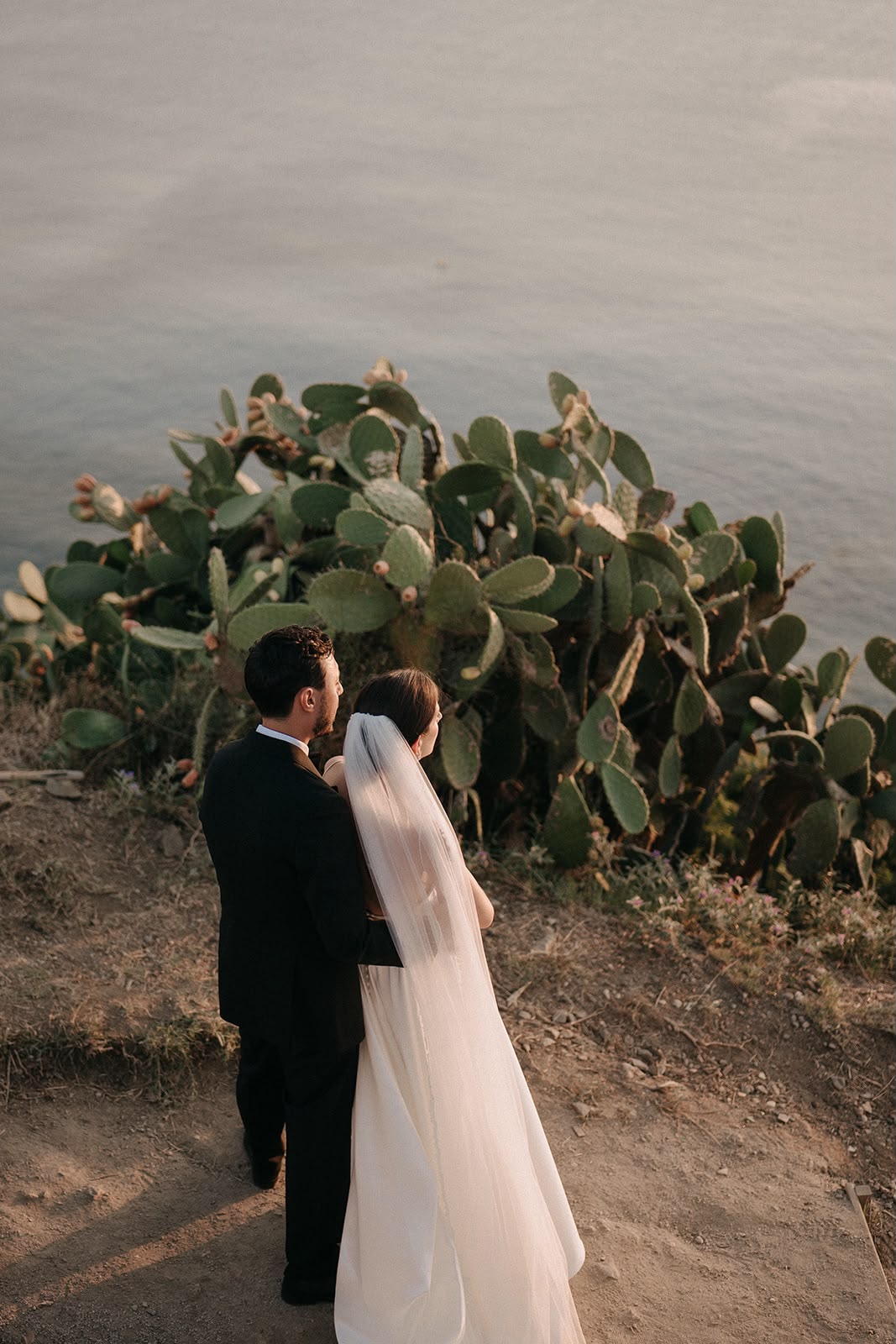
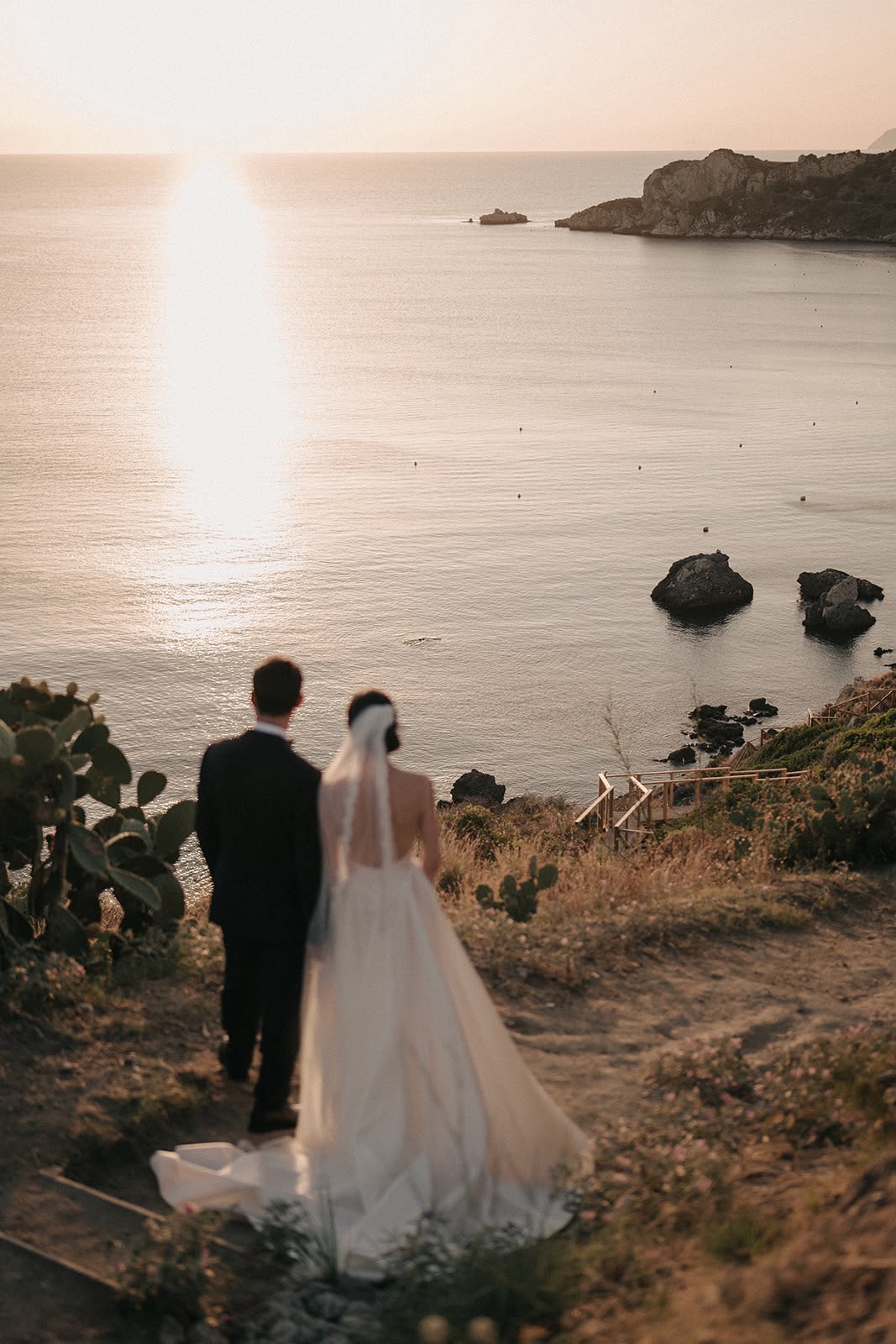
For couples choosing a Sicilian clifftop or a baroque courtyard specifically for its photographic value, a day-after session often makes more creative sense than cramming a second location into the wedding day itself. You get the scenic backdrop without the timeline risk. Many luxury planners now build a day-after session directly into the package, treating it as a second creative opportunity rather than an afterthought squeezed in if time allows.
Either option also gives your photographer more flexibility to experiment: different outfits, riskier locations, longer setups than a compressed wedding-day schedule would ever allow. If your heart is set on a specific scenic spot that doesn’t fit neatly into the ceremony-to-reception window, this is usually the answer, and it’s worth raising with your planner during the high-end pre-wedding event planning conversation early on.
How do you brief your planner and photographer properly?
A good brief is specific, not aspirational. Instead of “we want something romantic,” bring three to five reference images that show the mood you’re after, and be explicit about which locations matter most to you personally.
Confirm deliverables in writing before the wedding, not after: number of edited images, turnaround time for previews, whether raw files are included, and how many locations are covered in the base package versus an add-on. Ask your photographer directly whether stills and video are being planned as one coordinated vision or as two separate vendor timelines bolted together, since treating them as a single creative team changes how locations and light get used.
Your brief should also state non-negotiables clearly: family members who must be in formals, any locations you specifically want to avoid, and physical limitations (a grandparent who can’t manage stairs, for instance) that affect location choice.
Ask your planner to confirm delivery timing too. Many destination teams now deliver preview images within 48 to 72 hours specifically to reassure clients who flew home before the full gallery arrives, and knowing that window in advance saves you from anxious inbox-checking during your honeymoon.
Put all of this in one shared document your planner, photographer, and videographer can all reference, so nobody is working from a different version of your vision.
Who does what: photographer, videographer, assistant, and coordinator?
Each role on a scenic session has a distinct job, and clarity here prevents the awkward moment where two vendors both think someone else is handling something.
The photographer leads the shot list, sets the lighting plan for each location, and makes creative calls once the portrait session begins. The videographer works from the same creative brief but manages movement, audio, and continuity separately, which is why integrating both under one vision rather than treating them as competing vendors produces a more cohesive result.
An assistant (second shooter or lighting assistant) handles gear, backup angles, and candid coverage while the lead photographer focuses on the couple. Assistants also manage the practical stuff: battery swaps, reflector positioning, and keeping equipment out of frame.
The coordinator, whether that’s your planner or a dedicated day-of hire, owns everything that isn’t creative: transport, timing, guest movement, and permit compliance. As one Italian wedding photography source puts it, when a portrait location is off-site, the planner takes responsibility for logistics so the photographer can focus entirely on creativity.
This division isn’t just tidy org-chart thinking. It’s the difference between a photographer who’s mentally tracking a shuttle schedule and one who’s fully present composing your portrait against the light.
What does a full wedding day scenic session timeline actually look like?
Here’s how a single-location Sicilian wedding day with a golden-hour portrait block might run, working backward from sunset:
8:00 to 9:30 AM: Hair and makeup, detail shots. 10:00 to 11:00 AM: First look and initial couple portraits in soft morning light. 11:30 AM to 1:00 PM: Ceremony. 1:15 to 2:00 PM: Family formals, with a coordinator running the group list. 2:00 to 4:00 PM: Reception lunch and toasts. 4:30 to 5:30 PM: Guests enjoy cocktail hour while the couple slips away for the protected golden-hour portrait block. 6:00 PM onward: Dinner and dancing resume.
That 30 to 60 minute golden-hour window is the single most protected slot on the entire schedule, because it’s the one block of time you cannot recreate if it’s lost. If your ceremony runs 20 minutes long, that delay should eat into the reception buffer, never into golden hour.
For multi-venue days, add a transfer block between the ceremony site and the portrait location, calculated at 1.5 to 2.0 times your map’s driving estimate, and have the photographer arrive at the new location 10 to 20 minutes before the couple to reset lighting and framing. Skipping that arrival buffer is one of the most common reasons multi-site portrait sessions start rushed.
How do permits work for popular scenic locations?
Permit processes vary by site, but the pattern is consistent: someone has to file early, in writing, and confirm restrictions before you build a location into your timeline.
Historic estates and public clifftop viewpoints typically require a permit application submitted 60 to 90 days ahead, sometimes longer for particularly popular Sicilian sites during peak season (May through October). The application usually needs your date, estimated group size, and whether you’re bringing professional lighting or a drone, since drone use is commonly restricted or banned outright at protected sites.
Your planner should be the one filing this, not you or your photographer, because local offices respond faster to established relationships than to a one-time email from abroad. This is part of why hiring an on-the-ground local planner is considered the most important hire after the venue itself.
Confirm three things in the permit response: tripod and lighting equipment allowances, any time-of-day restrictions (some sites close to photography during peak visitor hours), and whether a backup date or rain contingency is built into the permit’s terms. Some municipal permits are single-use and non-transferable, meaning a last-minute location swap could mean starting the paperwork over.
Build permit confirmation into your one-page plan as a status line, not an assumption. “Pending” three weeks out is a red flag your planner should be chasing, not something to discover the week of the wedding.
What does a scenic photo session actually cost?
Scenic sessions carry line items that rarely appear on a base photography quote, and couples are often surprised by them after the fact.
Permit fees vary by site and can range from modest municipal charges to more substantial fees at protected historic locations. Transport adds up fast on multi-venue days: vendor-only transfers, plus any guest shuttles, plus fuel and driver time for locations outside city limits. Equipment rentals, like additional lighting for indoor backup locations or a drone operator where permitted, are typically billed separately from the core photography package.
Extra shooter hours are another common add-on, especially if you want coverage extended to capture a day-after session or an early-morning engagement shoot in different light. Cost drivers like permits, transfers, and extra shooter hours are exactly the line items that inflate a quote after the fact if they weren’t itemized upfront.
Ask for every scenic-session cost itemized separately from your base wedding package: permit fees, transport, equipment rental, and any additional vendor hours. A planner who bundles these vaguely into “miscellaneous” is one you should press for specifics before signing.
Build a modest contingency line, roughly 10% of your scenic-session budget, for last-minute permit fees or an unplanned equipment need. Weather-related indoor backup locations sometimes carry their own access fee, and that’s the kind of cost that surprises couples who didn’t ask upfront.
What happens when something goes wrong on the day?
Every scenic session needs a named decision-maker for the moment something doesn’t go to plan, whether that’s traffic, weather, or a location suddenly becoming unavailable.
If a delay eats into that buffer, the logistics lead’s job is to protect golden hour first and trim time elsewhere, typically from the reception cocktail hour rather than the portrait block.
Last-minute location changes happen more often than couples expect: a private estate closes for an unrelated event, a public viewpoint gets crowded with tourists, or weather makes a clifftop spot unsafe. This is exactly why your one-page plan needs named backup locations with their own confirmed access, not a vague “we’ll figure it out” note.
- Weather: indoor backup location confirmed in advance, with lighting gear ready to adapt
- Traffic: buffer already built into transfer timing, so a short delay doesn’t cascade
- Access changes: backup location scouted and permit-cleared before the wedding, not researched that morning
- Power issues at historic venues: low-wattage lighting equipment ready to substitute for high-draw gear
The go/no-go call belongs to one person, decided in advance, usually your planner or day-of coordinator. Democratic decision-making in the middle of a delayed timeline wastes the exact minutes you’re trying to protect.
Why integrated planning protects both your photos and your guests
I’ve seen enough wedding-day breakdowns to know the pattern: it’s almost never the photographer’s skill that fails, it’s the handoff between vendors that nobody owned. A scenic session that gets rushed usually traces back to a permit that wasn’t confirmed, or a transfer that wasn’t buffered, not to a photographer who lacked vision.
The sessions that go right share one trait: the planner scouted the location weeks ahead, briefed the photographer on the exact light and access conditions, and built the timeline around a protected golden-hour block instead of hoping one would appear. That’s not luck. It’s sequencing.
Before you commit to a planner, ask to see their portfolio and how past scenic sessions actually played out, not just the finished gallery. Ask for their scouting methodology and a sample timeline template. If they can produce both without hesitation, that tells you more about how your wedding day will run than any highlight reel.
How Sicilian Wedding and Event turns this plan into your wedding day
Everything covered here, the scouting, the permits, the golden-hour protection, the vendor handoffs, is exactly what full-service planning is built to handle, and it’s the reason couples hire a planner instead of stitching vendors together themselves.
Sicilian Wedding and Event, led by Tania Costantino, handles location scouting, permit filing, vendor curation for both photography and videography, multi-day coordination, and the kind of bespoke scenic routing that turns a Sicilian clifftop or baroque courtyard into a portrait session that actually runs on schedule. Every full-service booking includes a one-page scenic session plan built around your specific date and light conditions, not a generic template.
If you’re planning a destination wedding in Sicily, the next step is simple: request a scouting appointment or a sample timeline for your chosen venues. You’ll see exactly how your golden hour, your family formals, and your locations fit together before you commit to a date.
Frequently Asked Questions
How far in advance should scenic photo sessions be scouted?
Three months minimum for a luxury destination wedding, longer if the location requires a permit. This gives your planner time to confirm sun paths, access, and backup locations before finalizing your timeline.
How long should a golden-hour portrait session last?
Plan for a protected portrait block that is sufficient to capture key moments. Anything shorter risks rushing the couple; anything longer starts cutting into reception time.
Who decides if we need to move to an indoor backup location?
Your planner or day-of coordinator should hold that authority, decided in advance, so the call gets made quickly rather than debated in the moment.
Do we need a separate permit for drone photography?
Often, yes. Drone use is commonly restricted at historic or protected sites, so confirm this specifically when your planner files the location permit, not as an afterthought.
Should we do an engagement shoot if we’re already having a day-after session?
Not necessarily both. Many couples choose one or the other based on whether they want relaxed pre-wedding portraits or the loosened, no-pressure feel of a day-after session in the same scenic setting.
Sources
- Destination Wedding Photography: Complete Planning Guide – Showit Blog
- Luxury Destination Weddings: The Ultimate Guide to Planning Your Dream Celebration – Susan Stripling Photography
- Multi Location Wedding Day Logistics Guide (2026) – Tov Studio Photo